
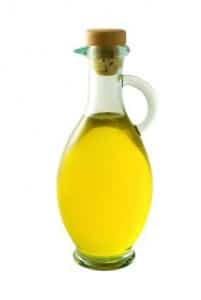
 Diesel car + $1000-$2000 conversion kit + free, filtered waste oil from a fast-food joint = really low cost, environmentally friendly driving (ethanol alcohol can also be used, but unlike oil, can be added to gasoline in most modern cars without modification).
Grease Car, Frybrid, and Elsbett (this may be their online store) are companies that explain some of the details about converting your car and other issues. They each also sell kits for the conversion. There are 1- (costs more) and 2-tank conversions (in a 2-tank conversion, the oil is stored in the 2nd tank while diesel is stored in the primary tank). Works in cold climates too. After the conversion, the car will run on only diesel with no problem, but can also run on veggie fuel (using a separate tan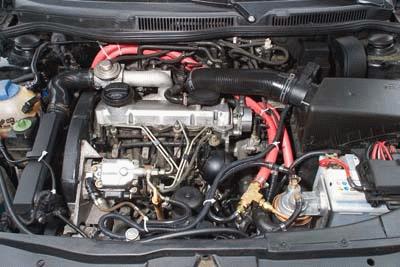 k). Newer TDI cars can also be converted. The car always starts using diesel, switching automatically to using the veggie oil from the separate tank only when the engine is hot enough to raise the temperature of the veggie oil so it can be used. Wonder if it would be worthwhile to convert the diesel to run on alcohol and also on veggie oil? In that case, the alcohol would power up the vehicle and veggie oil would be used when hot. Only issue that comes to mind here is that alcohol cars do not run hot. What follows is a short video talking about veggie oil recycling.
An interesting history of veggie oil as a fuel can be found here. This article talks about problems associated with vegetable oil polymerization and would be valuable to read before choosing a vehicle or conversion kit. The book, Vegetable Oil as a Fuel by Joe Beatty, available as a free pdf, talks about this and two other problems associated with veggie oil.
There are various companies and coops that collect and filter waste oil to improve its quality for use in cars.
- Smarter Fuel is a company that collects waste oil and filters it so it becomes a high grade fuel oil, taking the worry and work of filtering your own oil.
- Solaqua, a company in NY, that recycles vegetable oil, heats its facilities with vegetable oil, and powers its cars with veggie oil, has a cool video briefly describing veggie oil as a fuel.
- INOV8 is a Wisconsin company focusing on heaters and other larger-scale appliances that run on vegetable oil, but this 2007 article suggests they are also recycling and making available veggie oil for fueling cars.
- Blue Honey Biofuels is a Wisconsin coop that sells vegetable oil for fuel.
- PrairieFire BioFuels was active in Madison, WI but they are no longer in operation.
Just for fun (and light) are various oil lamps you can make, some of which are shown in this video. Try 100% cotton yarn or cotton balls for wicks. But see this video for safety warning.
We’ll want to compare alcohol, biodiesel, biogas, electricity, and vegetable oil for cost, fuel efficiency, and environmental impacts at some point in the future, but without such a comparison, vegetable oil seems like a contender. But, to get us started, here are some useful articles:
- A very simple article which makes a couple of interesting points: (1) biodiesel is only biofuel to have gone through all testing to confirm meeting Clean Air Act standards (others may be as good, we just don’t know it yet); (2) Ethanol works in any car vs. biodiesel which requires a diesel engine
- A chart comparing yields from various crops for biodiesel vs. ethanol
- This article suggests we should probably include electric vehicles in this comparison
- This article summarizes the arguments against biofuels of any kind, made by a nobel prize winning chemist. Argument is: (a) plants are inefficient at converting sun to energy compared to, say, solar panels; (b) we are not efficient at turning biomass into biofuels; (c) internal combustion engines are not efficient (“The efficiency of the average gasoline car hovers between 20-30% while for diesels it can be between 30-40%. This doesn’t compare well with the 88% drive efficiency of the Tesla Roadster”). It is worth going through with a fine-tooth comb. For now, just a few notes: (1) Plants only convert 1% of sunlight vs. 20% or higher for solar panels — in food forest, you have multiple plants absorbing the light from top to bottom. All can be used for fuel. (2) 50% of energy yielded is used up in growing and harvesting feedstock biomass — in permaculture this is not true. (3) analysis ignores biofuels from waste; (4) So, biofuel to power generator to charge electric car?
Pingback: Solutions for a Functional Future | One Planet Thriving
I have a truck with VO control and am looking for a mechanic that can work on my system. Can you refer me to someone that is familiar with VO control system? Just moved to Madison from Michigan.
Prairie Fire Biofuels is best best: http://pfbf.typepad.com/
Pingback: Rocket Stoves & Rocket Mass Stoves (& Wood Stoves) | One Planet Thriving
Pingback: Alcohol: A Renewable Energy that Sequesters Carbon and Can Power Our Lives? | One Planet Thriving
Pingback: Open Source Ecology – Global Village Construction Set | One Planet Thriving
Pingback: The Energy of Stirling Engines – Notes | One Planet Thriving
Pingback: The Dehumidifier Does My Laundry | One Planet Thriving